How it works

Each wheel is built from overlapping curved segments carried on a gear ring. Rotating the ring relative to the hub slides every segment outwards or inwards at once, which changes the effective rolling diameter while keeping the contact surface continuous. The expansion drive is separate from the drive that turns the wheel, so diameter and speed are controlled independently and the rover doesn't have to stop to change configuration.
Each segment carries part of the vehicle's weight at every wheel diameter. The fully expanded position has the least overlap and the longest unsupported span, so it set the segment thickness, material and upper limit of the diameter range.
The starting point was a published variable-diameter wheel mechanism. I adapted it to a vehicle this size and to parts that could either be printed or bought from a normal distributor, because the version two bill of materials had to come in around €410. The budget determined the materials and mechanisms we could use.

The rover carries an environmental sensor package and measures the air while it drives. The chassis was drawn to revision D before anything was cut.
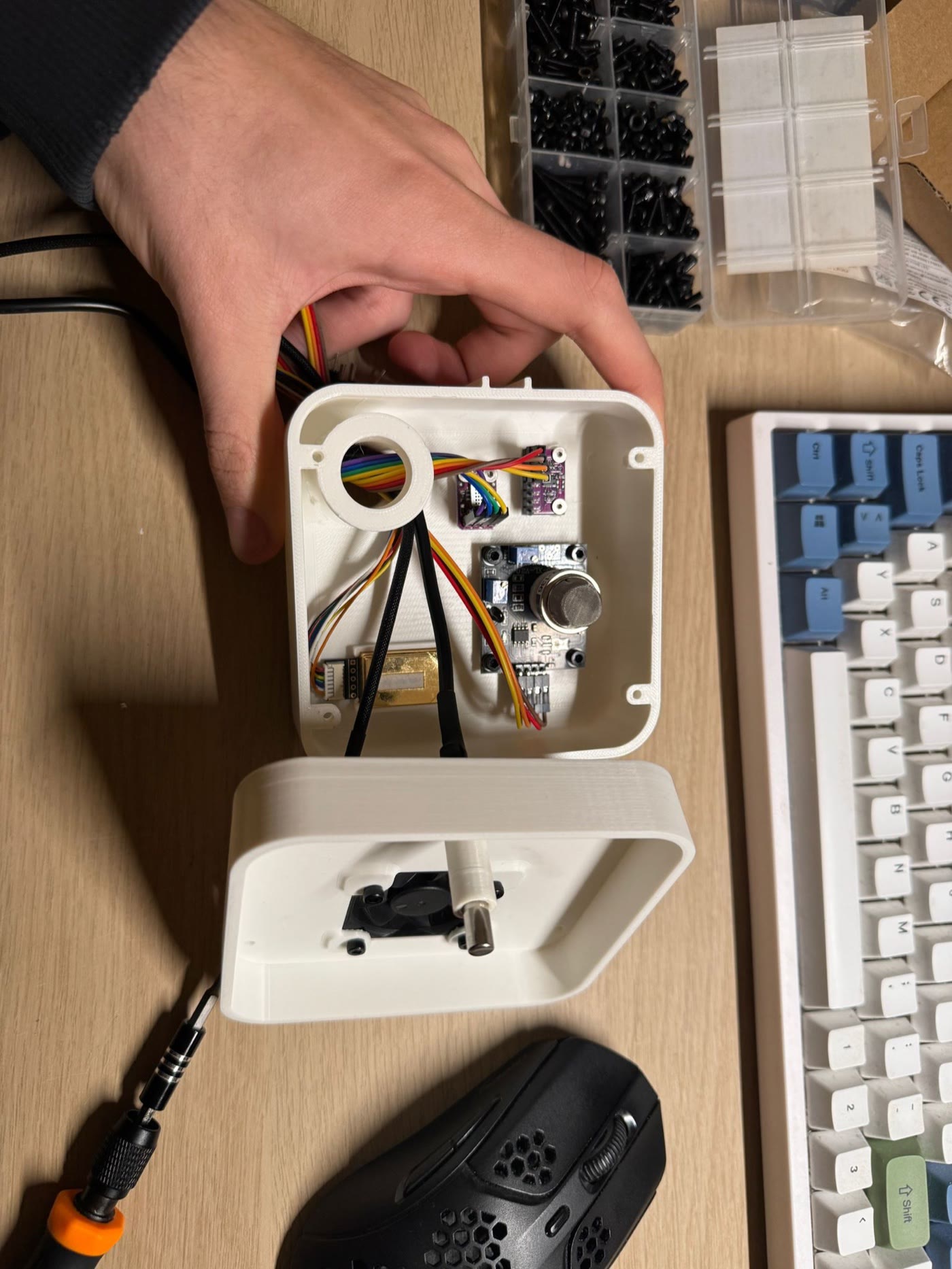
This enclosure belongs to the MAGMA rover. It holds the environmental sensors and fan used during the DLR Vulcano challenge.
What I got wrong
Our demonstration video failed to show that the rover worked.
Our five-minute demonstration video was due while I was in Georgia visiting my grandparents, and the two days before the deadline were the Bavarian state round of a different competition. The rover was at my flat, nobody was there to film it, and what I had were isolated five-second clips of individual functions, filmed in a hurry the evening before my flight. I cut them together and submitted them, and the result was bad. We had spent months and about €450 on a machine that worked, and what the judges saw was a badly shot clip of something that could have been anything.
I now schedule documentation as part of the build and record each subsystem as soon as it works.
Where it stands
Version one drives, the wheel mechanism works, and the sensor package is integrated. Version two is designed and partly sourced.
The current vehicle is remote-operated. Autonomy is not implemented.